Welcome to Sea-Ex THAILAND - Fish Photos and Information - Common Carp


Sea-Ex Thailand
Thailand Home Page
Free Classified Adverts
Angling Home Page
 
Fresh Water Fish
 
Alligator Gar
Arapaima
Asian Redtail Catfish
Asian River Catfish
Barramundi
Big Head Carp
Big Toman (Giant Snakehead)
Blue Eye Catfish
Bronze Featherback
Clown Featherback
Common Carp
Featherback
Freshwater Stingray
Giant Catfish
Giant Featherback
Giant Gourami
Giant Mekong Catfish
Giant Siamese Carp
Grass Carp
Greater Brook Carp
Hampala Barb
Indo-Pacific Tarpon
Jullien's Golden Carp
Mozambique Tilapia
Nandid Perch
Nile Tilapia
Pacu
Red Bellied Pacu
Red Tail Catfish
Red Tail Tiger Catfish
Ripsaw Catfish (Niger Catfish)
Rohu
Royal Featherback
Schwanenfeld's Barb
Silver Barb
Small Scale Mud Carp
Smith's Barb
Snakehead
Striped Catfish (Sutchi Catfish)
Tiger Catfish
Walking Catfish
 
Marine Fish (Salt water fish)
 
African Pompano
Amber Jack
Barracouta (Snoek)
Pickhandle Barracuda
Barramundi
Big Eye Trevally
Black Marlin
Black Blotched Stingray
Black Spot Shark
Blacktip Reef Shark
Blue Marlin
Bluefin Trevally
 

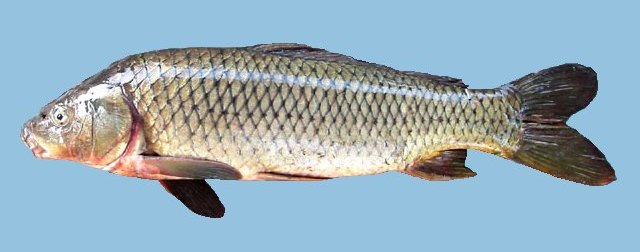
Common Carp

Common Carp


Scientific Name Cyprinus carpio carpio
Size 120 cm SL (male/unsexed); max. published weight: 37.3 kg; max. reported age: 20 years
Biology

Occur at a temperature range of 3-35°C. Hardy and tolerant of a wide variety of conditions but generally favor large water bodies with slow flowing or standing water and soft bottom sediments. Common carp thrive in large turbid rivers. They are omnivorous, feeding mainly on aquatic insects, crustaceans, annelids, mollusks, weed and tree seeds, wild rice, aquatic plants and algae; mainly by grubbing in sediments. Spawn in spring and summer, laying sticky eggs in shallow vegetation. A female 47 cm in length produces about 300,000 eggs. Young are probably preyed upon by northern pike, muskellunge, and largemouth bass. Adults uproot and destroy submerged aquatic vegetation and therefore may be detrimental to duck and native fish populations. Utilized fresh and frozen. Aquarium keeping: in groups of 5 or more individuals; minimum aquarium size >200 cm; not recommended for home aquariums.

Danger Potential pest


© 1996 - 2008 Sea-Ex Thailand Co. Home | FAQs
Any problems regarding this page, please contact
Disclaimer | Join our Affiliate Program

Privacy Policy