|
|
|
|
|
Directory & Info for
Fishing,
Angling, Fishing Tackle, Fishing Guides, Fly Fishing, Bass Fishing,
Sports fishing, Game Fishing....
Info on All types of
Fishing | Angling | Fishing Tackle etc. |
| |
|
Glossary of Fish, Seafood and Fishing Terms |
|
|
|
Australian Fish Bag Limits and Size Regulations |
|
Photos of Australian Seafood, Fish, Crustaceans &
Cephalopods and Information on each... |
|
Abalone, Blacklip |
|
Albacore
Tuna |
|
Baler Shell |
|
Barbounia, Tiny |
|
Barracouta |
|
Barramundi |
|
Bass, Sea |
|
Batfish |
|
Batfish, Silver |
|
Blackfish |
|
Boarfish |
|
Bonito Tuna |
|
Bonito, Watson's Leaping |
|
Bream |
|
Bream, Butter |
|
Bream, Slate |
|
Bug, Moreton Bay
(Slipper Lobster) |
|
Bug, Balmain |
|
Butterfish |
|
Calamari,
Southern |
|
Carp, European |
|
Catfish, Blue |
|
Catfish, Lesser Salmon |
|
Cockles |
|
Cod, Bar |
|
Cod, Blue eye |
|
Cod, Coral Rock |
|
Cod, Ghost |
|
Cod, Maori |
|
Cod, Murray
|
|
Cod, Southern Rock |
|
Cod, Spotted |
|
Cod, Tomato |
|
Cod, Wirrah |
|
Cod, Yellow Spotted |
|
Coral Trout |
|
Cowanyoung |
|
Crab, Blue Swimmer |
|
Crab, Champagne |
|
Crab, Giant
|
|
Crab, Mud |
|
Crab, Spanner |
|
Crawfish |
|
Cuttlefish |
|
Dart Fish |
|
Dolphin Fish |
|
Dory, John |
|
Dory, Mirror |
|
Dory, Silver
|
|
Drummer, Southern |
|
Eel, Longfin |
|
Emperor, Red |
|
Emperor, Red Throat |
|
Flathead |
|
Flounder, Small Toothed |
|
Flutemouth, Rough |
|
Frost Fish |
|
Garfish |
|
Gemfish |
|
Goatfish |
|
Grouper |
|
Gurnard, Red |
|
Gurnard, Spotted |
|
Hairtail |
|
Hump Headed
Maori Wrasse |
|
Hussar |
|
Jackass Fish |
|
Jacket, Ocean |
|
Jacket, Sea |
|
Jewfish |
|
Jobfish, Gold Banned |
|
Jobfish, Rosy |
|
Kingfish,
Yellowtail |
|
Latchet Fish |
|
Leatherjacket, Reef |
|
Ling |
|
Lobster Eastern
Rock |
|
Lobster Southern Rock |
|
Long Tom |
|
Luderick |
|
Mackeral, Jack |
|
Mackerel, Slimey |
|
Mado |
|
Mahi Mahi |
|
Mangrove Jack |
|
Marlin, Black |
|
Marlin, Blue |
|
Marlin, Striped |
|
Melon Shell |
|
Monkfish |
|
Mono |
|
Moon Fish |
|
Morwong |
|
Morwong, Red |
|
Mullet - Roe |
|
Mullet, Diamond Scale |
|
Mullet, Red |
|
Mullet, Sea |
|
Mullet, Yelloweye |
|
Mulloway |
|
Mussels Black |
|
Mussels Greenlip |
|
Nanygai |
|
Octopus |
|
Orange Roughy |
|
Oreo, Black |
|
Oyster,
Native |
|
Oyster,
Pacific |
|
Oyster, Sydney Rock |
|
Parrot Fish |
|
Parrot Fish (2) |
|
Perch, Ocean |
|
Perch, Saddle Tail Sea |
|
Perch, Silver |
|
Perch, Splendid |
|
Perch, Stripey Sea |
|
Pig Fish |
|
Pike |
|
Pineapple Fish |
|
Prawn, Banana |
|
Prawn, King |
|
Prawn, Red Spot |
|
Prawn, School |
|
Prawn, Tiger |
|
Queenfish, Needleskin |
|
Rainbow Runner |
|
Redclaw Crayfish |
|
Redfish |
|
Ribaldo |
|
Ribbon Fish |
|
Rudder Fish |
|
Salmon, Atlantic |
|
Salmon, Australian |
|
Scad |
|
Scallops,
Queensland |
|
Scallops, Tasmanian |
|
Scorpion Fish, Raggy |
|
Shark |
|
Shark Black Tip |
|
Shark, Blue |
|
Shark Bronze Whaler (Dusky) |
|
Shark, Bull |
|
Sharks Fins |
|
Shark, Gummy |
|
Shark, Mako |
|
Shark, School |
|
Shark,
Tiger |
|
Shark,
Whiskery Reef |
|
Shark, White |
|
Shrimp, Mantis |
|
Sicklefish |
|
Silver Biddy |
|
Snapper |
|
Snapper, Big Eye |
|
Snapper, Fry Pan |
|
Snapper, Gold Band |
|
Snapper, King |
|
Snapper,
Red |
|
Snapper, Red Tropical |
|
Sole |
|
Sole, Tongue |
|
Squid, Arrow |
|
Squirrel Fish |
|
Stargazer |
|
Stingray, Butterfly |
|
Stripey Sea
Perch |
|
Surgeonfish, Sixplate Sawtail |
|
Sweetlip, Slatey |
|
Sweetlip, Yellow |
|
Swordfish |
|
Tailor |
|
Tarwhine |
|
Tilefish,
Pink |
|
Trevally, Big Eye |
|
Trevally, Golden |
|
Trevally, Silver |
|
Triple Tail |
|
Trout |
|
Trumpeter, Striped |
|
Tuna,
Albacore |
|
Tuna, Bigeye |
|
Tuna, Bluefin |
|
Tuna, Longtail |
|
Tuna, Skipjack |
|
Tuna, Striped |
|
Tuna, Mackerel |
|
Tuna, Yellowfin |
|
Venus Tusk Fish |
|
Whiting, Sand |
|
Whiting, School |
|
Wrasse |
|
Yabby,
Freshwater Crayfish |
|
Yellowtail |
|
FULL LIST of Fish &
Seafood |
|
Beche De Mer
(Sea Cucumber - Trepang) |
|
Amberfish |
|
Blackfish |
|
Black Teatfish |
|
Brown Sandfish |
|
Curryfish |
|
Elephants Trunks fish |
|
Greenfish |
|
Lollyfish |
|
Pinkfish |
|
Prickly Redfish |
|
Sandfish |
|
Stonefish |
|
Surf Redfish |
|
White Teatfish |
|
|
|
Commercial
Seafood Directory |
|
Sea-Ex Seafood, Fishing, Marine
Directory |
|
Aquaculture Directory |
|
Commercial Fishing |
|
Seafood Information by
Country |
|
Australian Fish Photos &
Info |
|
Interesting Fish Facts & Trivia |
|
Country Directories |
|
Thailand Business
Directory |
|
Seafood: |
|
Wholesale Seafood
Suppliers Australia |
|
Wholesale Seafood
Suppliers International |
|
Retail Seafood Sales |
|
Seafood Restaurants |
|
Seafood Recipes |
|
Seafood Information |
|
Seafood
Industry Resources |
|
Moreton
Bay Bug (Thenus orientalis) Photographs
and Information
|
Moreton Bay Bugs are also known as
Bay Lobster, Bug, Shovelnose Lobster, Slipper Lobster, Squat Lobster and
Mud Bug.
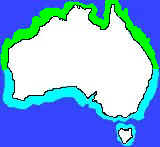
Moreton Bay Bugs are found along the entire coast of the northern half of Australia.
They live on the sea bed, in turbid inshore coastal waters from 10 metres to 30
metres in depth over soft, unconsolidated mud and fine sand and silt particles.
 Two spawning or more are common and take place during the summer. A female can
produce between 16,000 and 60,000 (average 32,000) eggs per brood. Two spawning or more are common and take place during the summer. A female can
produce between 16,000 and 60,000 (average 32,000) eggs per brood.
They are active at night, remaining buried in bottom
sediment with only their eyes and
antennules or "feelers" exposed during the day. They are highly mobile and
can move great distances (up to 50 nautical miles)
Adults are selective foragers and will capture live prey including fish, crustaceans
and molluscs.
Moreton Bay Bugs are generally caught commercially as a by-catch of local prawn
fisheries by demersal otter trawls and with dredge nets.
How to tell Balmain and
Moreton Bay Bugs apart: Balmain is a narrow peninsula and
Balmain Bugs’ eyes are narrow, located close together in the
centre of their heads. Moreton Bay is a wide bay and Moreton Bay
Bugs’ eyes are set broadly apart on either side of their shells.
Slipper Lobsters’ eyes are in between, closer to the edges than
the centre, but not on the actual edge.
|
 |
 |
|
|
| Scientific Name |
Thenus orientalis |
| Location |
Northern Half of Australia |
| Season |
All year round. |
| Size |
To 560 grams, but usually around 120g |
| Australian Species Code |
00 700002 |
| Taste, Texture |
Sweet delicate taste, medium texture |
|
Nutritional Information
For every 100 grams raw product
for Bug meat. |
|
Kilojoules |
399 (95
calories) |
|
Cholesterol |
121 mg |
|
Sodium |
185 g |
|
Total fat
(oil) |
0.8 g |
|
Saturated
fat |
36% of total
fat |
|
Monounsaturated fat |
23% of total
fat |
|
Polyunsaturated fat |
41% of total
fat |
|
Omega-3, EPA |
39 mg |
|
Omega-3, DHA |
49 mg |
|
Omega-6, AA |
45 mg |
|
|
Fishing for Moreton Bay Bugs:
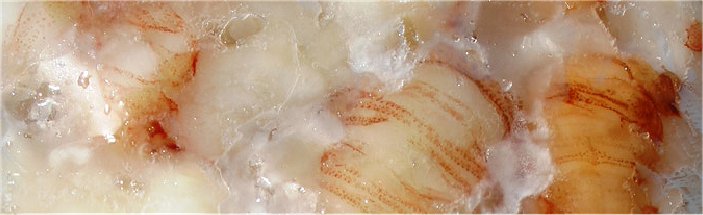
Available wild-caught, it is a marine crustacean with a reddish
brown shell, broad flat head with eyes at either edge of the
shell, short narrow tail and 5 pairs of small legs. Found on
muddy or sandy bottoms at 10-60m, north from northern NSW to
Shark Bay in WA, though caught primarily between Cairns and
Bundaberg as by-catch of Prawn and Scallop fisheries. They often
bury themselves in sand or mud during the day and become active
after dark. Thenus orientalis can be distinguished from Thenus
indicus by the spots on its legs and a brown tail fan (T.indicus
has no spots and a yellow tail fan).
|
|
Cooking Moreton Bay
Bugs - Slipper Lobsters:
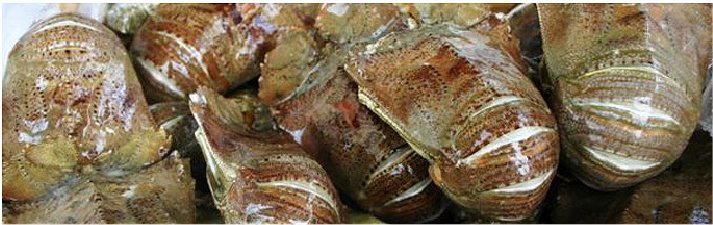
Bugs
are usually sold whole, sometimes live but often already cooked.
If possible buy live from a tank, in which case they should be
lively with a hard shell (indicating that they haven’t recently
moulted) and all legs and antennae should be intact. In cooked Bugs, look for brightly coloured,
firm, intact, lustrous shells, without any discolouration,
particularly at joints, and a pleasant fresh sea smell. They
should feel heavy for their size and their tails should be
tightly curled.
Steam, poach, deep-fry, pan-fry, stir-fry, grill, or barbecue
Bugs.
|
|
Commercial Fishing for Moreton Bay Bugs:
The Queensland Trawl Fishery targets several species of prawns, scallops and
other species. Trawls alter the substrate cover in the area being swept by the
trawl and they catch fish and other bottom-dwelling (benthic) animals as a
by-catch. Trawlers take and market a range of by-catch species, including
Moreton Bay bugs,
blue swimmer crabs, winter whiting, squid, cuttlefish and
other species.
Trawlers can tow either otter or beam trawl nets, traveling across the seabed
at slow speeds, mainly between 2.5 and 3.5 knots at various depths. Otter trawls
are used primarily for the capture of prawns and
scallops, whereas beam trawlers
(usually operating inshore and in estuaries, eg. Moreton Bay, Hervey Bay), is
used for the capture of prawns (usually, greasyback, school and
banana prawns).
Beam trawling involves towing of a trawl net with the mouth of the net held open
by a rigid frame on skids. Most of the catch goes to the bait market, but banana
prawns are sold for human consumption. Buyers of Slipper Lobster,
Sellers of Moreton Bay Bugs also listed.
|
|