|
|
|
|
|
Directory & Info for
Fishing,
Angling, Fishing Tackle, Fishing Guides, Fly Fishing, Bass Fishing,
Sports fishing, Game Fishing....
Info on All types of
Fishing | Angling | Fishing Tackle etc. |
| |
|
Glossary of Fish, Seafood
and Fishing Terms |
|
|
|
Australian Fish Bag Limits and Size Regulations |
|
Photos of Australian Seafood, Fish, Crustaceans &
Cephalopods and Information on each... |
|
Abalone, Blacklip |
|
Albacore
Tuna |
|
Baler Shell |
|
Barbounia, Tiny |
|
Barracouta |
|
Barramundi |
|
Bass, Sea |
|
Batfish |
|
Batfish, Silver |
|
Blackfish |
|
Boarfish |
|
Bonito Tuna |
|
Bonito, Watson's Leaping |
|
Bream |
|
Bream, Butter |
|
Bream, Slate |
|
Bug, Moreton Bay
(Slipper Lobster) |
|
Bug, Balmain |
|
Butterfish |
|
Calamari,
Southern |
|
Carp, European |
|
Catfish, Blue |
|
Catfish, Lesser Salmon |
|
Cockles |
|
Cod, Bar |
|
Cod, Blue eye |
|
Cod, Coral Rock |
|
Cod, Ghost |
|
Cod, Maori |
|
Cod, Murray
|
|
Cod, Southern Rock |
|
Cod, Spotted |
|
Cod, Tomato |
|
Cod, Wirrah |
|
Cod, Yellow Spotted |
|
Coral Trout |
|
Cowanyoung |
|
Crab, Blue Swimmer |
|
Crab, Champagne |
|
Crab, Giant
|
|
Crab, Mud |
|
Crab, Spanner |
|
Crawfish |
|
Cuttlefish |
|
Dart Fish |
|
Dolphin Fish |
|
Dory, John |
|
Dory, Mirror |
|
Dory, Silver
|
|
Drummer, Southern |
|
Eel, Longfin |
|
Emperor, Red |
|
Emperor, Red Throat |
|
Flathead |
|
Flounder, Small Toothed |
|
Flutemouth, Rough |
|
Frost Fish |
|
Garfish |
|
Gemfish |
|
Goatfish |
|
Grouper |
|
Gurnard, Red |
|
Gurnard, Spotted |
|
Hairtail |
|
Hump Headed
Maori Wrasse |
|
Hussar |
|
Jackass Fish |
|
Jacket, Ocean |
|
Jacket, Sea |
|
Jewfish |
|
Jobfish, Gold Banned |
|
Jobfish, Rosy |
|
Kingfish,
Yellowtail |
|
Latchet Fish |
|
Leatherjacket, Reef |
|
Ling |
|
Lobster Eastern
Rock |
|
Lobster Southern Rock |
|
Long Tom |
|
Luderick |
|
Mackeral, Jack |
|
Mackerel, Slimey |
|
Mado |
|
Mahi Mahi |
|
Mangrove Jack |
|
Marlin, Black |
|
Marlin, Blue |
|
Marlin, Striped |
|
Melon Shell |
|
Monkfish |
|
Mono |
|
Moon Fish |
|
Morwong |
|
Morwong, Red |
|
Mullet - Roe |
|
Mullet, Diamond Scale |
|
Mullet, Red |
|
Mullet, Sea |
|
Mullet, Yelloweye |
|
Mulloway |
|
Mussels Black |
|
Mussels Greenlip |
|
Nanygai |
|
Octopus |
|
Orange Roughy |
|
Oreo, Black |
|
Oyster,
Native |
|
Oyster,
Pacific |
|
Oyster, Sydney Rock |
|
Parrot Fish |
|
Parrot Fish (2) |
|
Perch, Ocean |
|
Perch, Saddle Tail Sea |
|
Perch, Silver |
|
Perch, Splendid |
|
Perch, Stripey Sea |
|
Pig Fish |
|
Pike |
|
Pineapple Fish |
|
Prawn, Banana |
|
Prawn, King |
|
Prawn, Red Spot |
|
Prawn, School |
|
Prawn, Tiger |
|
Queenfish, Needleskin |
|
Rainbow Runner |
|
Redclaw Crayfish |
|
Redfish |
|
Ribaldo |
|
Ribbon Fish |
|
Rudder Fish |
|
Salmon, Atlantic |
|
Salmon, Australian |
|
Scad |
|
Scallops, Queensland |
|
Scallops, Tasmanian |
|
Scorpion Fish, Raggy |
|
Shark |
|
Shark Black Tip |
|
Shark, Blue |
|
Shark Bronze Whaler (Dusky) |
|
Shark, Bull |
|
Sharks Fins |
|
Shark, Gummy |
|
Shark, Mako |
|
Shark, School |
|
Shark,
Tiger |
|
Shark,
Whiskery Reef |
|
Shark, White |
|
Shrimp, Mantis |
|
Sicklefish |
|
Silver Biddy |
|
Snapper |
|
Snapper, Big Eye |
|
Snapper, Fry Pan |
|
Snapper, Gold Band |
|
Snapper, King |
|
Snapper,
Red |
|
Snapper, Red Tropical |
|
Sole |
|
Sole, Tongue |
|
Squid, Arrow |
|
Squirrel Fish |
|
Stargazer |
|
Stingray, Butterfly |
|
Stripey Sea
Perch |
|
Surgeonfish, Sixplate Sawtail |
|
Sweetlip, Slatey |
|
Sweetlip, Yellow |
|
Swordfish |
|
Tailor |
|
Tarwhine |
|
Tilefish,
Pink |
|
Trevally, Big Eye |
|
Trevally, Golden |
|
Trevally, Silver |
|
Triple Tail |
|
Trout |
|
Trumpeter, Striped |
|
Tuna,
Albacore |
|
Tuna, Bigeye |
|
Tuna, Bluefin |
|
Tuna, Longtail |
|
Tuna, Skipjack |
|
Tuna, Striped |
|
Tuna, Mackerel |
|
Tuna, Yellowfin |
|
Venus Tusk Fish |
|
Whiting, Sand |
|
Whiting, School |
|
Wrasse |
|
Yabby,
Freshwater Crayfish |
|
Yellowtail |
|
FULL LIST of Fish &
Seafood |
|
Beche De Mer
(Sea Cucumber - Trepang) |
|
Amberfish |
|
Blackfish |
|
Black Teatfish |
|
Brown Sandfish |
|
Curryfish |
|
Elephants Trunks fish |
|
Greenfish |
|
Lollyfish |
|
Pinkfish |
|
Prickly Redfish |
|
Sandfish |
|
Stonefish |
|
Surf Redfish |
|
White Teatfish |
|
|
|
Commercial
Seafood Directory |
|
Sea-Ex Seafood, Fishing, Marine
Directory |
|
Aquaculture Directory |
|
Commercial Fishing |
|
Seafood Information by
Country |
|
Australian Fish Photos &
Info |
|
Interesting Fish Facts & Trivia |
|
Country Directories |
|
Thailand Business
Directory |
|
Seafood: |
|
Wholesale Seafood
Suppliers Australia |
|
Wholesale Seafood
Suppliers International |
|
Retail Seafood Sales |
|
Seafood Restaurants |
|
Seafood Recipes |
|
Seafood Information |
|
Seafood
Industry Resources |
|
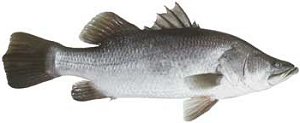
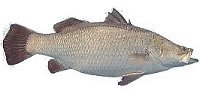
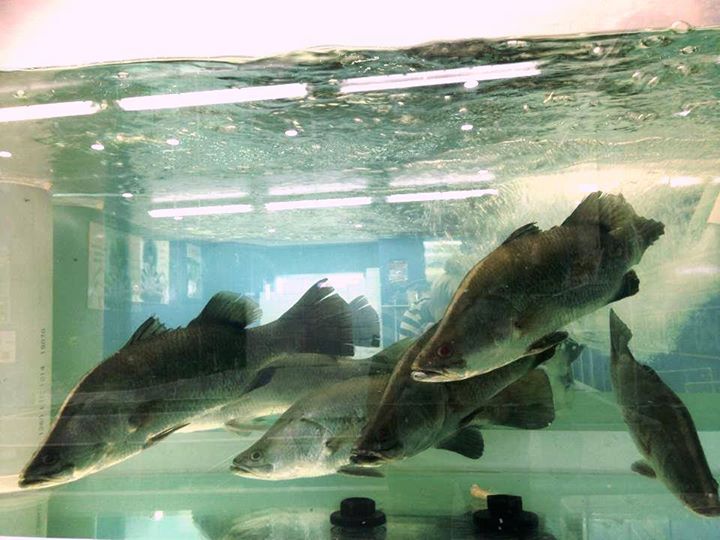
Barramundi (Lates calcarifer)
Photographs and Information
Barramundi are also known as
Sea Bass, Barra,
giant perch, giant sea perch, silver barramundi. The name Barramundi came
from an Aboriginal word that means ‘large scaled river fish’.
Barramundi are harvested as part of the set gill net fishery on the eastern coast of
Queensland and in the Gulf of Carpentaria. They are also farmed.
|
Also known as Sea Bass, Barra,
giant perch, giant sea perch, silver barramundi, Asian Sea Bass.
Barramundi are harvested as part of the set gill net fishery on the eastern coast of
Queensland and in the Gulf of Carpentaria. They are also farmed.
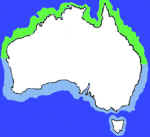
Available both wild-caught
and farmed, it is caught using gillnets in coastal and fresh
waters in Australia’s tropical north, from the Ashburton River
in WA to the Noosa River in Queensland. They live in rivers and
creeks, but do move into estuaries and coastal shallows to
breed. Darwin, Weipa, Cairns, Innisfail, Townsville, Bundaberg
and Adelaide are all important Barramundi farming centres.
The name Barramundi came
from an Aboriginal word that means ‘large scaled river fish’
Queensland barramundi have a single annual summer spawning period, with the timing and
duration varying between regions, river systems and from year to year depending on water
temperature and salinity.
Generally fish spawn around river mouths so that larval and juvenile barramundi can use
swamps that form during the monsoon season. Annual wet season rainfall influences
adult spawning success and juvenile recruitment.
Juvenile barramundi are highly dependent on estuarine and freshwater habitats.
They move from the estuarine areas up into the freshwater habitats to grow for one to two
years. During the dry season, Barramundi may become land-locked in up river
waterholes and lagoons of river systems. They move back to tidal areas when rains
open these rivers.
For that reason you find
that in Australia, in areas that are heavily fished you are not
allowed to keep Barramundi over 80 cm. It's catch and release
so future generations of anglers will still be able to go
Barramundi fishing.
|
 |
 |
Did you know? Females produce a lot
of eggs - about 300,000 per kg of body weight. The eggs hatch within 20 hours
and grow quickly.
Did you know?
Barramundi
are born as males and at about 6 years of age change to females.
When
Barramundi have reached over 80cm they are now female and ready for
breeding.
Did you know?
Barramundi are thought to live to around 20 years of age
Did you know?
Barramundi have been recorded up to 150cm long and with weights
in excess of 40kg
|
| Scientific Name |
Lates calcarifer |
| Location |
Northern half of Australia |
| Season |
All year round |
| Size |
To 56 kg |
| Australian Species Code |
37 288001 |
.
|
Nutritional Information
For every 100 grams raw product
for Barramundi fillet. |
|
Kilojoules |
- |
|
Cholesterol |
45
mg |
|
Sodium |
- |
|
Total fat (oil) |
0.9
g |
|
Saturated fat |
43%
of total fat |
|
Monounsaturated fat |
32%
of total fat |
|
Polyunsaturated fat |
26%
of total fat |
|
Omega-3, EPA |
11
mg |
|
Omega-3, DHA |
50
mg |
|
Omega-6, AA |
57
mg |
|
|
Barramundi are
euryhaline, meaning they can live in both fresh and salt
water. However, barramundi eggs and larvae will only survive
in brackish or salt water (salinities between 22 and 40 parts
per thousand (ppt)) and for this reason all breeding takes place
in river mouths and bays near areas of suitable nursery habitat.
Areas such as mangrove swamps and low-lying land that becomes
flooded during spring tides and monsoonal rains provide ideal
habitat for juvenile barramundi.
Barramundi eat a range of
food including fishes, shrimp, crayfish, crab and aquatic
insects and they are mainly but not exclusively nocturnal
feeders.
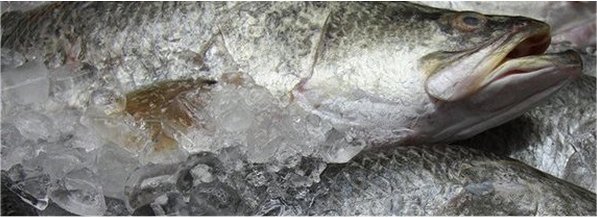
Barramundi are a very important commercial species. They are excellent eating.
The Barramundi is a big fish. It can weigh
10 to 20 kg and more, and a length of over 1 metre isn't
uncommon. Its maximum size is 1.8 metres and it will then weigh
about 60 kg.
Barramundi are predators and love to hang out near rocks
and logs, where they can hide and wait for unsuspecting smaller fish or
crustaceans
The name “Barramundi” appears to have
become well used in Australia by the later part of the 19th
century, however, the origins are not entirely clear.
A number of Barramundi producers advise that anecdotally, the
name is Aboriginal and means “fish with big scales”, and that it
is also applied to the Saratoga. It is hard to confirm this
through the main sources on Aboriginal languages, but they do
confer that the word “Barramundi” is likely to have been of
Aboriginal origin.
Certainly the word seems to have had early currency in Central
Queensland, particularly in the Fitzroy region, where it was
used to relate to fish and events in that area. The early
spelling varied, including Burra Mundi and burramundi and
Barramunda. Read more about the name BARRAMUNDI from
The Australian Barramundi Farmers Association
|
Angling Fishing for Barramundi:
Barramundi Fishing: Barramundi are a
premier game and sport fish
, and they are prolific all
across the Northern Territory and Kimberley coast. Their full
range extends from Shark Bay in Western Australia across the top
and down to the Mary and Maroochy river systems in Queensland.
Fishing methods
include trolling, lure casting out soft plastics, hard body
baits like crank baits, and surface lures. Barramundi fishing
can be undertaken by casting lures to “structure” such as
submerged logs, rock bars and overhanging banks. Barramundi are
basically lazy fish and mostly will not put in too much effort
to catch a feed so casting needs to be tight. Barramundi can
also be caught by fly fishing and by trolling and
they can be tough on gear so make sure you have the best.
|
|
Cooking Barramundi
: Barramundi flesh is white and moist
with a medium to firm texture and fairly large flakes. The
flavour is mild, subtle and highly prized. Barramundi are very
versatile when it comes to cooking. Barramundi is well suited to
all methods of cookery because of its moist texture and mild
flavour. It is delicious when pan-fried, steamed, chargrilled or
barbecued. Best served with leafy green vegetables such as baby
bok choy and rocket.
|
|
Commercial Fishing
for Barramundi:
Barramundi Lates calcarifer, occurs
throughout the South-East Asian region, including northern
Australia. In South-East Asia barramundi is known as
Asian sea bass and a successful farming industry, particularly
in Thailand, has been established for many years. In the wild,
they can grow to 180 cm total length (up to 60 kg) but farmed
fish are usually sold at plate size (500 g) or around 3 kg (for
filleting).
Australian barramundi is farmed in diverse
production systems. The majority of production comes from
outdoor fresh or salt water pond operations and sea cages, in
North Queensland, Western Australia and the Northern Territory.
|
|
Links & Resources
for Barramundi:
Government information, publications and
website links for Barramundi. Australian Government Fisheries
Statistics Links, Barramundi Farmers Association, Information on
the Barramundi, Lates calarifer from Sea-Ex Trade Seafood
Industry Directory.
 |
|