GAME
FISH TAGGING
The Game
Fish Tagging Program originated 26 YEARS
ago at the
NSW Fisheries Research Institute. The program involves the
distribution of tags to recreational anglers belonging to clubs that are
affiliated with the GFAA (Game Fishing Association of Australia) and
ANSA (Australian National Sportfishing Association) We also encourage
all individual anglers who don't belong to a club to tag and release, to
preserve our fish stocks.
The continuing success of the NSW
Gamefish Tagging Programme depends upon the co-operation of the numerous
participating recreational anglers and club officials throughout
Australia. It also depends on those recreational & commercial fishermen
who find tags in fish. Please return tags, with information on the fish
to NSW Fisheries Research Institute.
There are two
(2) types of tag:
- The Plastic tag is
for Tuna, Mackerel, Kingfish, Salmon, Dolphin Fish etc.
- The Steel tag is for
the large pelagic fish, being all species of Billfish and Sharks.
(Anglers must only tag fish that are
recommended for game fish tagging, on the 'Recommended
Species List')
When the angler tags the fish, they fill
out the details on a tag card with the corresponding tag number, and
return it to Fisheries Research Institute (F.R.I.), postage paid. The
data is then entered onto the database. They receive huge quantities of
tag cards each season and every year the program is expanding, which is
quite encouraging. When a fish is recaptured with a tag in it, the
angler sends F.R.I. back the information, and they then compare it to
the tag and release information that they have received prior. Both the
first release and recapture anglers are sent a letter with the
comparative details, and later issued with a Game Fish Recapture
Certificate. They do not issue monetary rewards as at present the
program doesn't posess the adequate funding.
This knowledge enables the F.R.I. to
observe migratory habits of the fish by measuring the distance travelled,
and also monitor their growth patterns and behaviour in accordance with
the calculated days or years the fish has been at liberty. All of this
information is of vital importance for the insight and management of
each particular fishery.
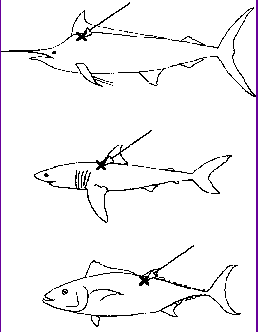
TAG PLACEMENT - Please
look after the fish
- Remove the hook if it can be done
easily. If not, cut the line as close to the fish as possible.
- Return the fish to the water as
quickly as possible.
- If you lay the fish down, put it on a
smooth, cool, wet surface.
- Keep your
tag applicator clean.
- The preferred tag placements are shown
on the diagrams below:
Striped Marlin: How
to Catch and Release Big Fish - Great Article
by Jon Schwartz
with fantastic photos striped Marlin
|